
Rockland County Previous Residents Sources
The first question is the time period. Rockland County's address trail crosses online indexes, archives, printed directories, maps, and local-history collections. Each source records a different connection to a property. A deed can establish a recorded party and date. A criss-cross directory can pair a name with a printed address. A map can explain a parcel or building. The table separates the documented time spans so a gap in one channel does not become a false dead end.
| Source | Years it covers | Where held | What it shows |
|---|---|---|---|
| County Clerk online land records | January 2, 1930 through August 14, 2026 in the Certified Dates display | County Clerk eSearch | Recorded land-record index and available images |
| Deeds and mortgages collection | 1798 to present | County Clerk and Archives Building S | Recorded property interests and legal descriptions |
| County telephone books | 1910 through 1998 | New City Library Rockland Room | Dated printed name-and-address listings |
| Cross Reference Directories | 1978 through 1999 | New City Library Rockland Room | Address-to-name directory entries |
| Nyack and Haverstraw books | Nyack 1883 through 1890; Haverstraw 1884 through 1890 | Rockland Room collections | Earlier community and household leads |
| Digitized railroad-route directories | 1889 through 1890, 1890 through 1891, and 1904 | Rockland Room Omeka | Village, station, route, and business-community listings |
Start with the most recent reliable parcel and transaction, then step back to the source nearest the period being tested. The era table is a route map, not a claim that every volume, page, or household is online.
Anchor Rockland County Address History
For an address-history search, the Tax ID and legal description are often steadier than the written street address. Search the property in Rockland GIS and record its Tax ID, municipality, situs label, parcel shape, ZIP, and nearby roads. The public viewer supports documented Address and Tax ID searches. It maps parcels and districts, but it does not provide a confirmed countywide owner-name search. The correct town assessor is the next source for a current property card when a needed assessment field is not visible.
Keep the situs, tax mailing address, and parcel in separate columns. A mailing address can point to an owner away from the property, while the situs identifies the land. This distinction is essential when sorting past residents from past owners. It also prevents a change in postal city or ZIP from being mistaken for a move.
Note: Record the address exactly as printed in every source, including unit number and street spelling, before deciding that two entries concern the same place.
Trace Rockland County Previous Residents by Deed
A chain of title is the backward sequence of recorded transfers for the same property. It documents the parties to land transactions, not a household roster, but it provides the dates and legal descriptions that make a longer address history testable. Rockland County's land records include deeds, mortgages, satisfactions, and assignments. Use the deed chain to locate earlier owners, then use directories, census resources, newspapers, and maps to investigate whether a dated household relationship is supported.
- Confirm the parcel's current legal description and identify the latest owner of record through the assessor and GIS chain.
- Search that owner's purchase as a grantee in County Clerk eSearch, then save the date, parties, instrument or book-and-page identifier, and legal description.
- Search the seller from that document as a grantee to find the earlier purchase, checking alternate name forms where the index requires them.
- Repeat backward and compare the legal description on every transfer. A deed may use a lot, subdivision, or metes-and-bounds description instead of a current street label.
- When the needed date is not online, continue with the Clerk counter, mail copy route, or Archives Building S rather than stopping at the portal boundary.
The County Clerk eSearch portal allows guest viewing of available images, while printing requires an account under the Clerk's published terms.
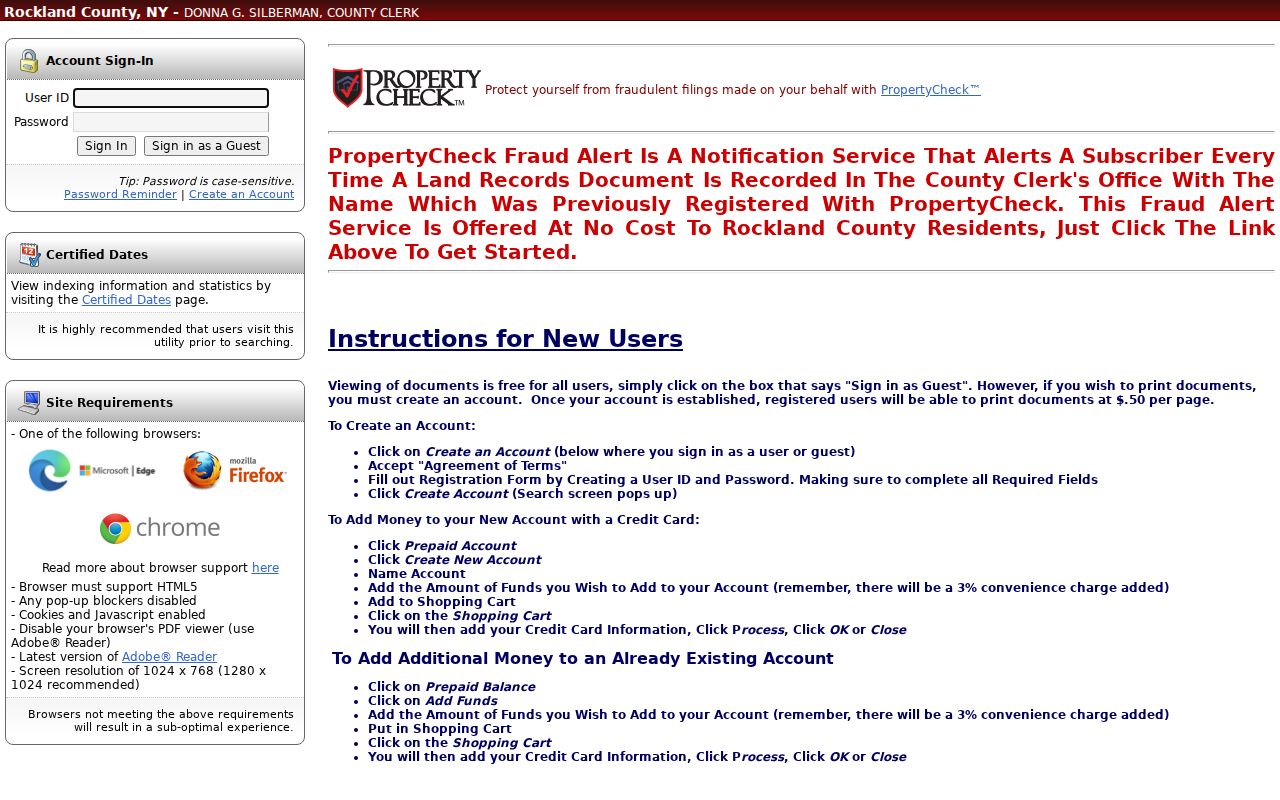
Use the portal to establish a document trail, then compare the instrument against the parcel before attaching it to a previous-resident timeline.
- Grantor and grantee
- The grantor transfers an interest in land; the grantee receives that recorded interest.
- Chain of title
- The ordered series of recorded transfers used to follow ownership of the same parcel backward.
- Legal description
- The deed's land description. It is often more stable than a street number when a parcel is subdivided or an address changes.
Rockland County Previous Residents Offline
The County Clerk's collection reaches farther back than the online certified-date display. The Clerk's Certified Dates page shows online Land Records beginning January 2, 1930, while the County Archives describes deeds and mortgages from 1798 to the present. The difference matters: an older address history may require paper, microfilm, or an on-site request even though the subject exists in the county collection.
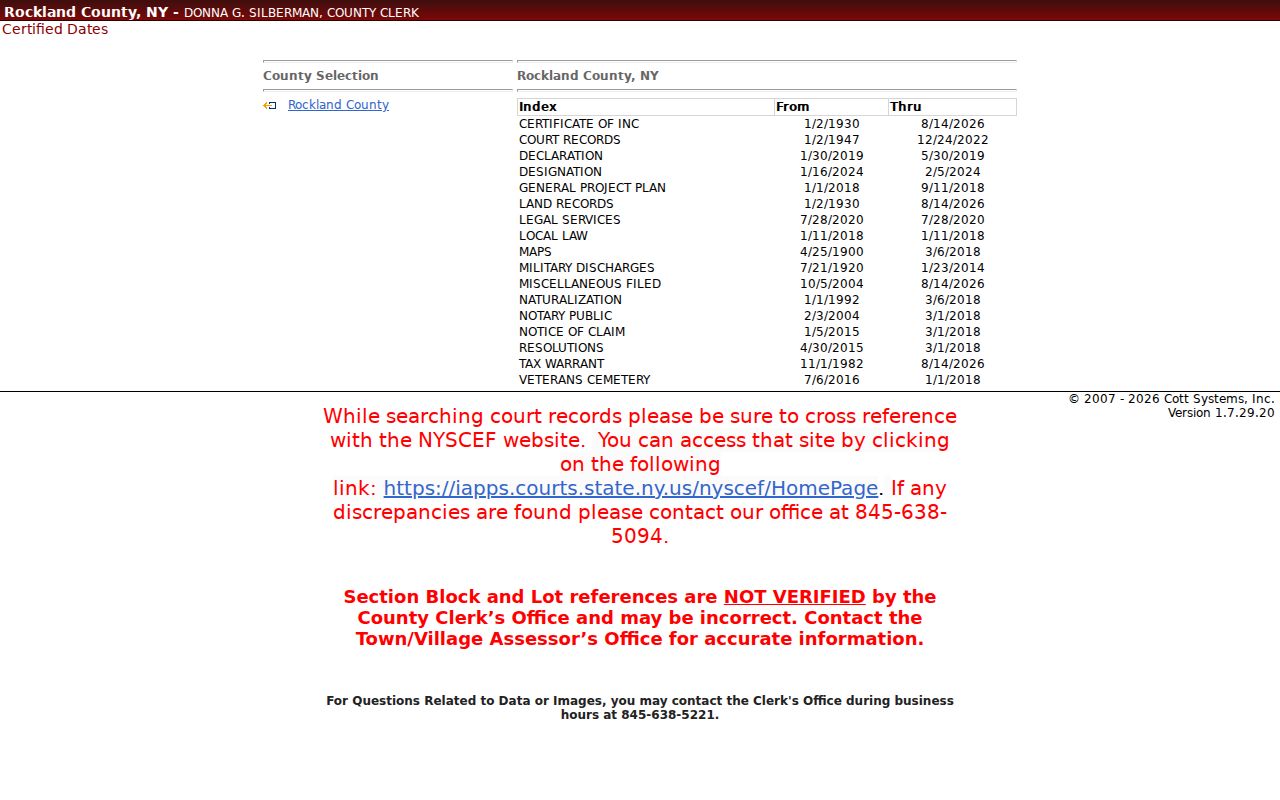
The screen gives a useful online cutoff, not a complete history of the property. Archives Building S in Pomona is the documented fallback for older county material. Researchers view papers on the premises after completing a File Request Card, and should request the particular file pages needed.
The County Clerk's main office is in New City, while the Archives are a separate location. Write down the file location and current access hours before traveling, because a court index, a deed image, and an older paper file may each have a different access route.
Note: Save the document identifier before requesting a paper file because an online index entry does not guarantee the paper is at the courthouse.
Map Rockland County Past Addresses
No authoritative countywide street-renumbering or renaming ledger was located. For an old address, compare the legal description, Tax ID, parcel shape, municipal assessor history, postal city, historic maps, aerials, and newspaper notices. The county assembled digital tax maps after 1987 and has maintained GIS data since 1994; before that, individual towns maintained their own maps. A similar road name alone is not enough to establish continuity.
Rockland offers three useful views of a historic place: a current GIS parcel, 1876 maps that name landowners and businesses, and the 1896 Nyack Sanborn map with building footprints and uses. The Pearl River 1876 map and the Nanuet map in New York Heritage can add roads, family plots, and business context. These sources can explain a changed building or street label, but none is a roster of people.
Note: Treat map labels as period evidence and compare them with the legal description before attaching an old building to a modern parcel.
Pair Rockland County Past Residents
Once the deed trail has identified a dated property, use the library's address directories as a household layer. County telephone books span 1910 through 1998 and Cross Reference Directories span 1978 through 1999. Earlier Nyack and Haverstraw runs fill selected nineteenth-century periods. A criss-cross entry works from street and number toward a printed name. It can suggest that a person or household was listed at an address for that edition, but it does not prove ownership or uninterrupted residence.
- Choose a directory year close to the deed or map date and transcribe the street, number, page heading, and listed name exactly.
- Check the next available directory edition for the same address and note any changed initial, unit, or neighbor line.
- Pair the dated directory lead with the relevant census resources available through the Rockland Room and its genealogy databases.
- Search local newspapers and obituary help for an event, relative, or address clue that can corroborate the period.
- Mark each result as a printed listing, household clue, or recorded transaction instead of combining those categories.
The Rockland Room's digitized directory collection includes the 1889-90 Nyack and Northern Railroad directory, the 1890-91 Haverstraw and West Shore Railroad directory, and an Erie Railroad route directory from 1904.
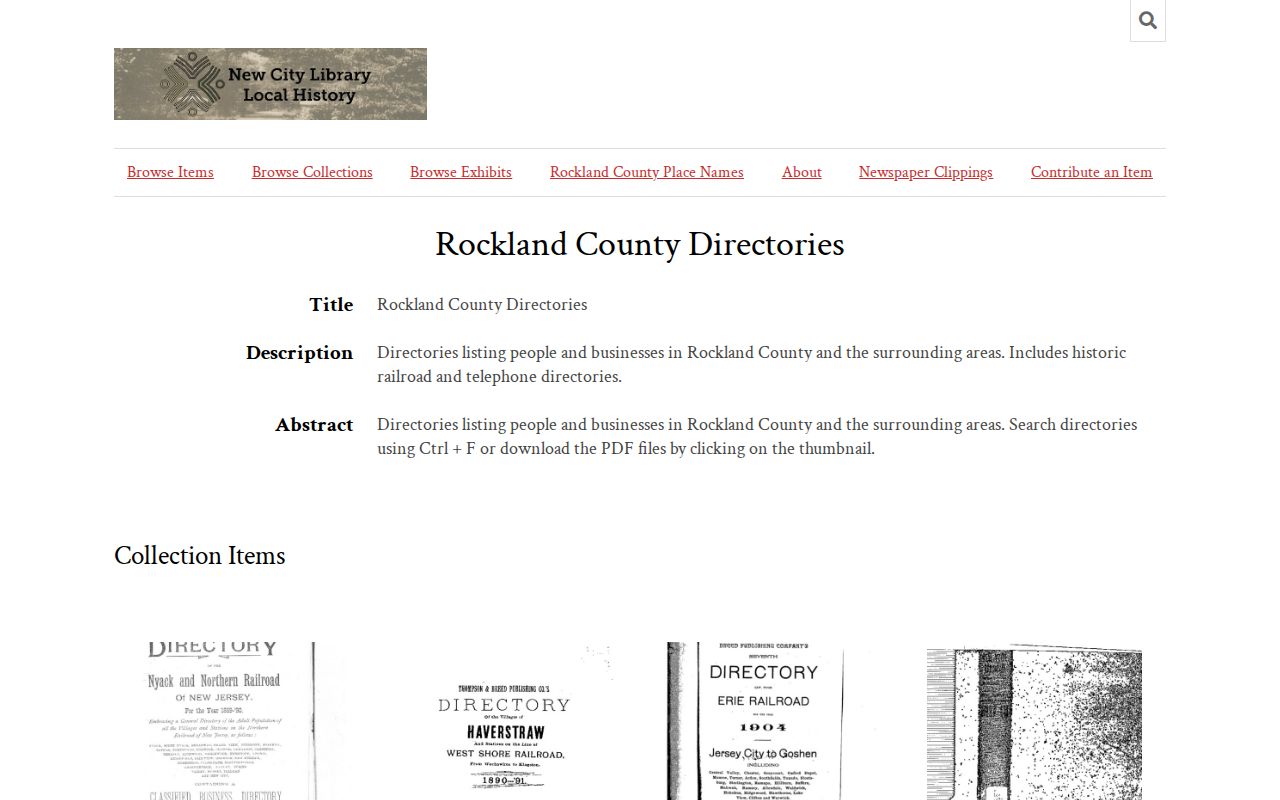
Those titles are local and route-based, not a single countywide series. The fuller collection context belongs with the Rockland County Directory Book.
Note: A directory gap can mean a missing edition or a different coverage area, not that the address had no household.
Find Rockland County Previous Residents Locally
The New City Library Rockland Room brings together printed local histories, maps, family histories, newspapers, obituary help, oral histories, photographs, and local exhibits. Its resource mix helps turn an address timeline into a family-history question without confusing a name lead with proof. The collection page identifies library-only and online genealogy resources, local newspaper collections, and New York Heritage materials. Ask the local-history librarian whether an undigitized directory or microfilm reel can be consulted.
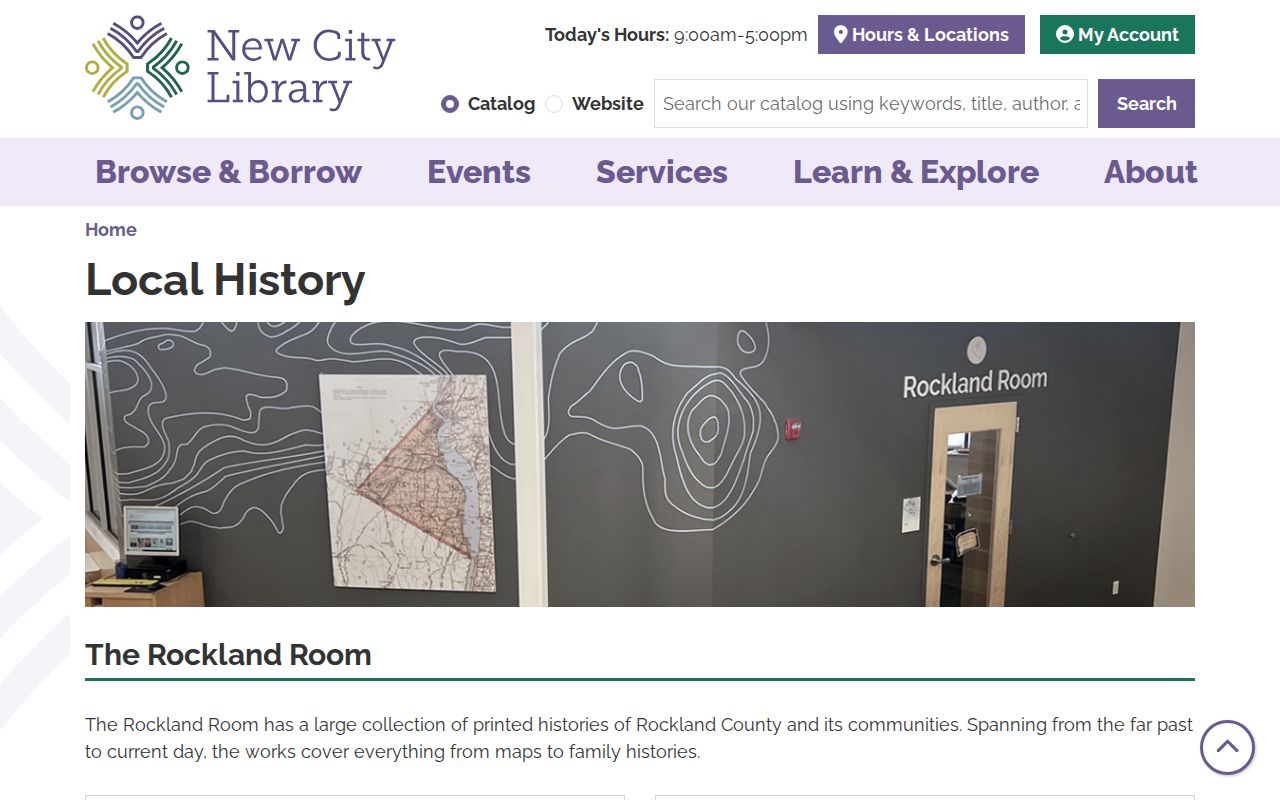
The Rockland Room and County Archives have different roles. Archives holds county-created records, while the library and historical organizations hold printed works, clippings, directories, and donated family material. The Historical Society and state newspaper inventory are useful next stops when a date or town narrows the search.
Rockland County Previous Residents Before 1798
Rockland County was created from Orange County on February 23, 1798, after the Ramapo Mountains made travel to the older county seat difficult. Early research may therefore point to Orange County, a town rather than a village, or a rural place that later gained a postal name. New City became the county seat. That history is especially useful when a deed trail appears to begin abruptly at the county line.
The county's records changed media over time. Archives holds court, census, naturalization, selected marriage, tax-roll, and Board of Supervisors material alongside deeds and mortgages. A good previous-resident search expects handoffs among paper, microfilm, digital image, index, and map rather than one continuous online file.
Respect Rockland County Past Households
Past residents and past owners are not interchangeable. A recorded grantee may never have lived at the property, and a dated directory entry may show a person without documenting a legal interest. Some records are sealed, protected, incomplete, or limited to an appropriate custodian channel. New York's Address Confidentiality Program can protect an eligible participant's actual address through a substitute mailing address.
Lawful use. Research a Rockland County address for family history, estate questions, preservation, or personal property context. Do not use past household information to stalk, harass, intimidate, or harm a living person.
A dated evidence table is the safest conclusion: list the source, access date, address form, time period, relationship shown, and any unresolved conflict. It keeps useful local history from becoming an unsupported claim about a person.